Stokely Carmichael
Trinidadian-American activist who popularized Black Power.

Kwame Ture (born Stokely Standiford Churchill Carmichael; June 29, 1941 – November 15, 1998) was a Trinidadian and American activist who played a major role in the civil rights movement in the United States and the global pan-African movement. He was a key leader in the development of the Black Power movement, first while leading the Student Nonviolent Coordinating Committee (SNCC), then as the "Honorary Prime Minister" of the Black Panther Party and as a leader of the All-African People's Revolutionary Party (A-APRP).
- born
- June 29, 1941, Port of Spain, Trinidad and Tobago
- died
- November 15, 1998, age 57
- field
- Activism, civil rights, pan-Africanism
- nationality
- Trinidadian and American
- known_for
- Key leader in the Black Power movement; SNCC Freedom Rider; 'Honorary Prime Mini
Verified Timeline
Lore & Background
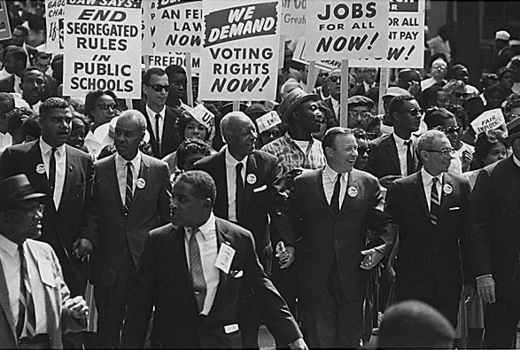
Carmichael was born in Port of Spain, Trinidad and Tobago, and moved to the United States at age 11, becoming an activist while attending the Bronx High School of Science. He was one of the original SNCC Freedom Riders of 1961 under Diane Nash's leadership, and became a major voting rights activist in Mississippi and Alabama after being mentored by Ella Baker and Bob Moses. Like most young people in SNCC, he became disillusioned with the two-party system after the 1964 Democratic National Convention failed to recognize the Mississippi Freedom Democratic Party as official delegates. Inspired by Malcolm X's example, he articulated a philosophy of black power, popularizing it through provocative speeches and writings. The author Richard Wright is credited with coining the phrase in his 1954 book Black Power. Carmichael became one of the most popular and controversial Black leaders of the late 1960s. FBI director J. Edgar Hoover secretly identified Carmichael as the man most likely to succeed Malcolm X as America's "black messiah." The FBI targeted him for counterintelligence activity through its COINTELPRO program, causing Carmichael to move to Africa in 1968. He reestablished himself in Ghana, and then Guinea by 1969, adopting the name Kwame Ture and campaigning internationally for revolutionary socialist pan-Africanism. Ture died of prostate cancer in 1998 at the age of 57.
Reader's Guide
Stokely Carmichael's significance lies in his transformation of the civil rights movement's direction and rhetoric. As a leader of SNCC, he shifted the organization toward Black Power, advocating for independent all-black political organizations such as the Lowndes County Freedom Organization and the Black Panther Party. His provocative speeches and writings made him a central figure in the late 1960s, both popular and controversial. The FBI's targeting of him through COINTELPRO underscores the government's perception of his influence. His later move to Africa and adoption of the name Kwame Ture reflected his commitment to pan-Africanism and revolutionary socialism. His legacy includes his role in the Freedom Rides, voting rights activism, and the global pan-African movement, though his exact number of arrests remains uncertain—he told the Washington Post in 1998 he thought the total was fewer than 36. He died of prostate cancer in 1998 at age 57.
Did You Know?
- Carmichael was the youngest Freedom Rider detained at Parchman Penitentiary in the summer of 1961, at age 19.
- He served 49 days with other activists at Parchman, spending 53 days total in a six-by-nine cell.
- FBI director J. Edgar Hoover secretly identified Carmichael as the man most likely to succeed Malcolm X as America's 'black messiah'.
- Carmichael adopted the name Kwame Ture after moving to Guinea by 1969.
- He was arrested so many times for activism that he lost count, but told the Washington Post in 1998 he thought the total was fewer than 36.
More in Activists & Social Reformers 1-22
Spotted an error? Know more?
This is a living reference — every entry is fact-audited, and reader corrections feed straight into our audit queue. Suggest an edit · See this site's audit record